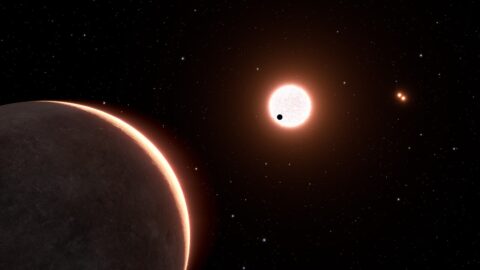
Decades-old observations from the Hubble Space Telescope have yielded a startling possibility: a dead star that may have given birth to a new planet.
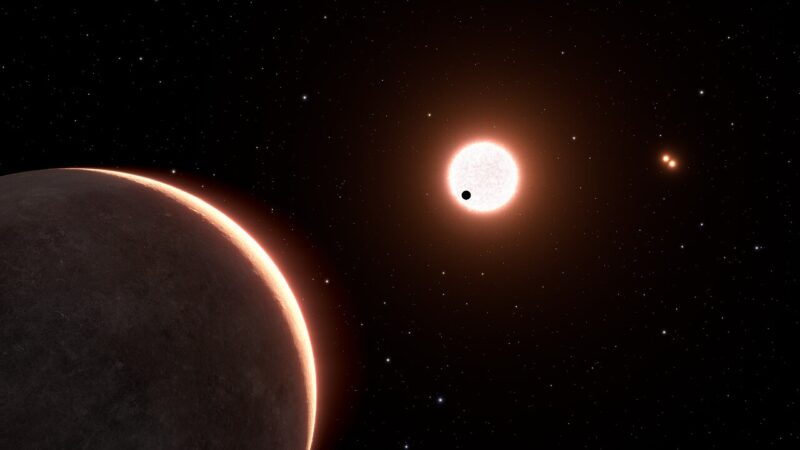
A study published on October 5 in Nature Astronomy re-examined archival Hubble data on the white dwarf HS 0209+0832 and found an unusual niobium chemical signature. The researchers say the signature suggests the stellar remnant may host a second-generation planet — one that formed later from material ejected by the dying star.
That would make it fundamentally different from first-generation planets like Earth, which formed alongside their stars from the same primordial disk. A second-generation world would be a planet born from the ashes of its own star’s death.
The study was led by Jamie Williams, a doctoral candidate at the University of Warwick. Corroborating data came from two other NASA missions: the Far Ultraviolet Spectroscopic Explorer (FUSE) and the Transiting Exoplanet Survey Satellite (TESS).
The finding challenges the long-held view of white dwarfs as stellar endpoints — inert cinders cooling quietly at the end of their lives. If confirmed, it would mean planetary systems can be reborn around dead stars, opening a new chapter in our understanding of how worlds form and evolve.
Further observations will be needed to confirm the planet’s existence, but the niobium clue has given astronomers a compelling cold case to pursue — one that began with light collected by Hubble long before the question was even asked.