NASA has selected PRIMA, a proposed far-infrared space telescope, to advance into Phase B preliminary design — the stage at which a mission proves its engineering before asking to be built — with a confirmation review still to pass, a notional launch in 2033, and a project cost capped at $1.2 billion if approved, according to reporting on the September 23, 2026 selection.
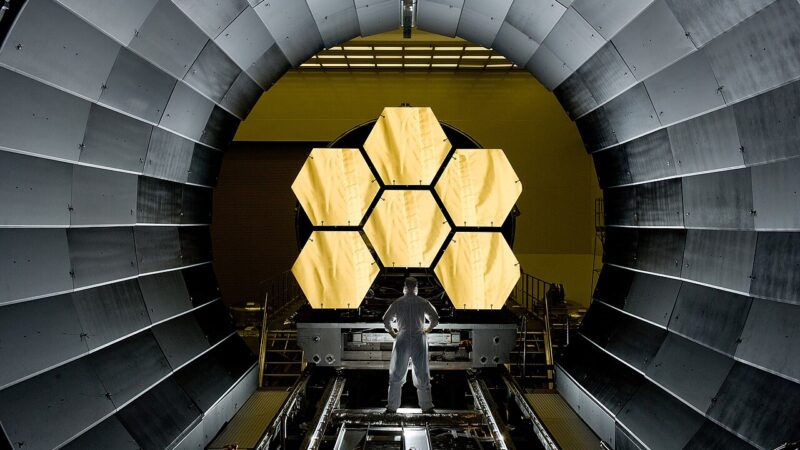
PRIMA aims at the spectrum’s neglected middle. Its instruments are designed for roughly 24 to 261 microns — the far-infrared wavelengths between Webb’s shorter-infrared vision and the radio telescopes’ longer waves — with imaging modes covering 25–80 and 91–261 microns around a 5.9-foot mirror. That band is where cold things speak: planet-forming dust, distant galaxies shrouded in their own soot, black holes growing inside it, and the water trail that connects interstellar clouds to oceans. “PRIMA will explore a hidden side of space,” runs the science case in summary — reveal how planets, stars, black holes and cosmic dust formed and evolved across cosmic time.
The mission’s champions at headquarters did not undersell it. “The PRIMA mission is humanity’s next window into the deep universe,” the agency’s science chief is quoted in the announcement coverage, promising understanding of “how water on Earth came to be” among its goals. The Jet Propulsion Laboratory manages the project, with Goddard and Marshall as partners — the institutional A-team, deployed on a probe-class budget discipline whose $1.2 billion cap explicitly excludes launch and non-project costs.
Phase B is where observatories go to become real or to be remembered as proposals. The decision followed assessment of scientific potential, technical approach, schedule and cost plans, in the agency’s account — and the confirmation gate ahead is the point at which cost and schedule estimates stop being arguments and become commitments. Far-infrared astronomy has waited a generation for a flagship-class successor in this band; the previous cold telescopes were European-led, apertures are unforgiving, and every year of delay is a year the cold universe is observed from the ground’s opaque sky or not at all.
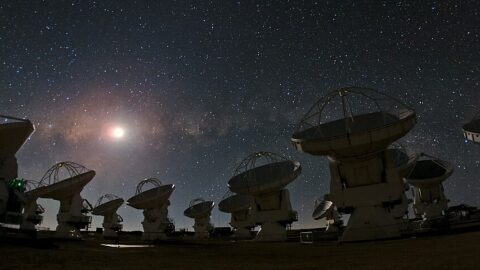
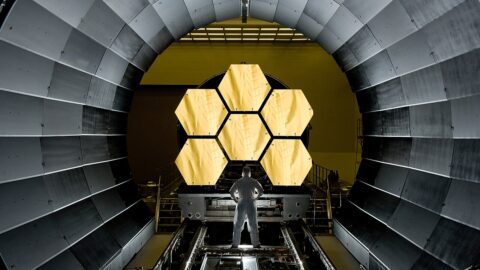
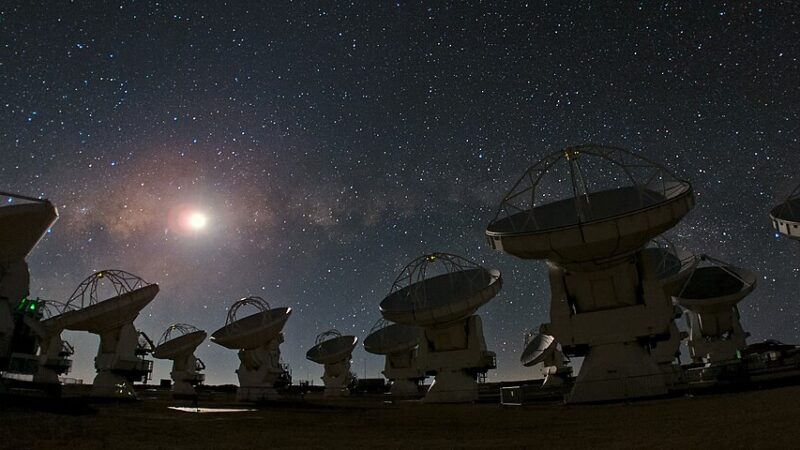
For readers keeping score of the 2026 observatory landscape — Webb in its prime, the Roman telescope commissioning after its August launch, ground giants rising in the Atacama — PRIMA is the long bet: seven years from paper toward a 2033 launch, aimed at the wavelengths where the universe keeps its raw materials. Approval is not construction, and this article reports a selection, not a launch. But every telescope now taking the images in our Science coverage began exactly here, in a Phase B review, asking permission to exist.
Related reading: