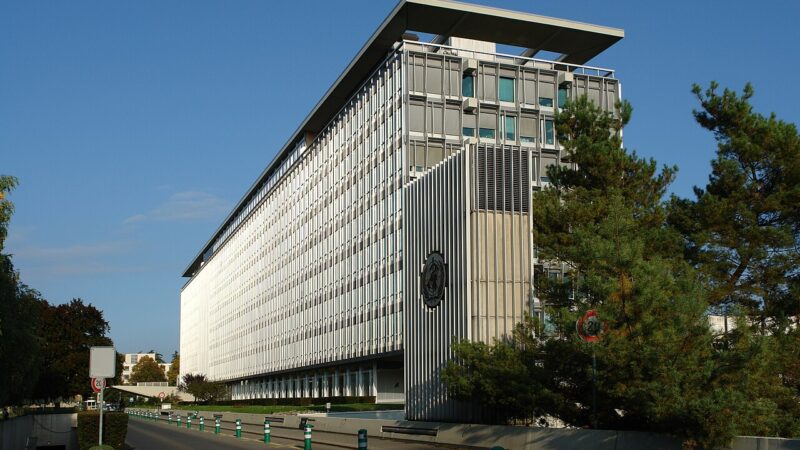
The United States completed its withdrawal from the World Health Organization on January 22, 2026, one year after the executive order that began it — terminating funding, recalling personnel from Geneva and worldwide postings, and suspending hundreds of technical engagements, according to official and policy reporting on the exit.
The financial hole is structural, not symbolic. The United States historically supplied roughly 16 to 18 percent of the agency’s revenue — an average of about $111 million in assessed dues plus some $570 million in voluntary contributions in the official figures cited in analyses — and about $260.6 million assessed for 2024–25 remains unpaid on the reporting. An organisation cannot lose a sixth of its income and a depth of its technical staff painlessly: the WHO has cut on the order of 2,300 jobs, around a quarter of its workforce by mid-2026, consolidated ten divisions into four, adopted a 2026–27 budget some 22 percent smaller, and voted a 20 percent increase in remaining members’ assessed contributions to begin filling the gap.
The counter-argument, made by the American health secretary in a video defence of the withdrawal, is accountability: that the agency failed its Covid test — on origins transparency, on guidance, on independence from powerful members — and that American public health is stronger funded directly, through bilateral programmes of the kind our companion reporting describes, than taxed through a bureaucracy Washington cannot reform. The withdrawal’s legal completion in January, and October’s rejection of the pandemic declaration that our Politics desk reports, are that argument applied in full.
What the United States has actually exited deserves precision. It has left the membership, the budget line, and the rooms where surveillance standards, pandemic rules and research priorities are set; the World Health Assembly adopted the Pandemic Agreement in May without American participation. It has not exited the biology. Pathogens will continue to arrive at American airports on the world’s schedule, and the early-warning system America now relies on is the one its funding built and its absence diminishes.
The December of this story is unknowable, which is the point of insurance. Supporters of withdrawal believe the premium bought deference, not protection, and that bilateral deals protect Americans better. Critics believe the United States has cancelled the fire policy to protest the fire brigade’s manners. Both will cite the next outbreak as vindication, in opposite directions, which is why the honest close is the factual one: as of 2026, for the first time since 1948, the world will meet its next pandemic with the United States outside the room where the world organises the meeting.
Related reading: