
London’s NFL residency returns this October to softer ticket demand, with resale-market indicators showing British buyers making up a smaller share of purchases than last year and price reductions angering fans who bought early — a market wrinkle that asks whether the league’s longest-running international product is maturing or saturating, according to ticketing reporting.
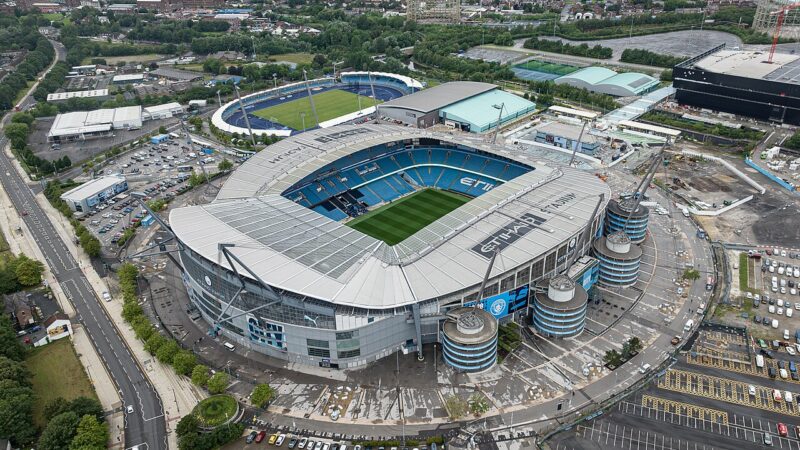
The reported figures sketch the change: British buyers accounted for about 51 percent of London-game purchases on one major resale platform, down from about 65 percent last year, while the geographic spread of buyers widened from 41 countries to 44. Read generously, that is internationalisation — London as a destination game for the league’s global fan base. Read coldly, it is local softening: the home crowd that once guaranteed sell-outs at any price is now one segment among many, and a price-sensitive one. The schedule this month — Colts-Commanders at Tottenham on October 4 (Indianapolis won 30-13), Eagles-Jaguars at Tottenham on October 11, Texans-Jaguars at Wembley on October 18 — supplies three weekends against which to test both readings.
Price discipline is where the anger sits. Early buyers paid launch prices as an act of loyalty; the market then discounted. Every sport that expands into a new territory runs this sequence — novelty pricing, correction, resentment — and London’s NFL, after nearly two decades of annual games, is simply arriving where mature products live: demand that must be earned per fixture, not assumed per postcode. The Jaguars’ long-standing London commitment once guaranteed a constituency; a calendar of three games in three weekends dilutes each one’s event status by design.
The league’s strategists will weigh this against the tour’s expansion elsewhere — Melbourne’s debut, Rio’s television numbers — and may conclude that London’s role is changing from frontier to fixture: lower growth, reliable yield, the dependable middle of a nine-game portfolio. There are worse fates for a market than becoming the league’s bankable second home. Wembley and Tottenham did not bid to be novelties; they bid to be venues, and venues are judged on the third decade, not the first.
October will supply the evidence turnstiles trust: three crowds, three atmospheres, and a secondary market that has already voted once. If the stadiums fill at corrected prices, London’s NFL will have passed the test every expansion eventually faces — the moment the circus becomes the calendar, and the calendar still sells.
Related reading: