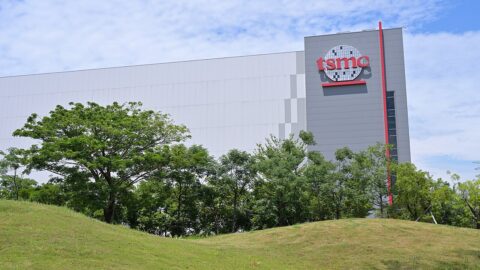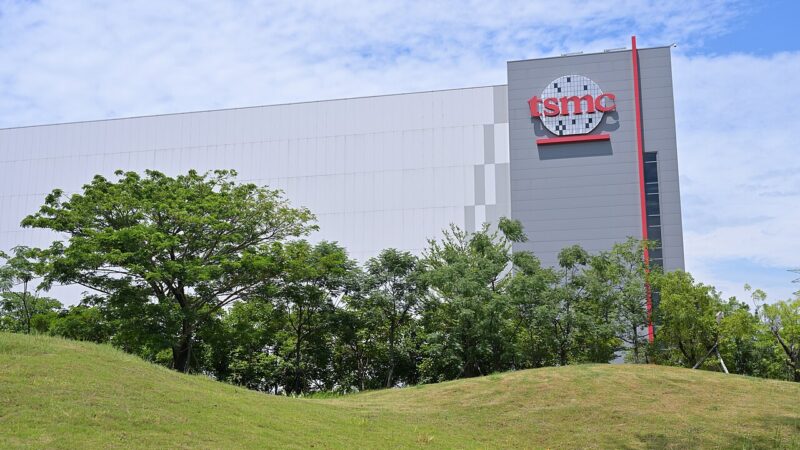

TSMC is evaluating a second major American campus in Texas — potentially up to six advanced wafer factories at roughly $20 billion each — even as its Arizona commitment has grown to a reported $265 billion across ten fabs, two packaging plants and a research centre, according to reports on the chipmaker’s United States expansion.
The Arizona core is no longer hypothetical. The first fab has been in production since 2024; the second was completed in April with equipment installation and 3-nanometre production targeted ahead of the original 2028 schedule, in the trade-press reporting; a third has broken ground. The July 2026 announcement of a further $100 billion, confirmed alongside record quarterly results, converted Arizona from a beachhead into the largest foreign direct investment in American manufacturing history — and, in the phrase now used by executives, a megafab cluster intended to run advanced nodes, including 2-nanometre-class and A16 technologies, on American soil at Taiwanese scale.
Texas enters the story as the next question, not yet as a decision. Reporting in late September 2026, originating with Taiwanese financial media and followed in American trade coverage, describes an evaluation — land, power, water, incentives — that has not been approved by TSMC’s board and has not been notified to suppliers. The October 15 earnings call was watched as the checkpoint at which evaluation might become announcement; careful readers will distinguish, as this article does, between a company studying a map and a company breaking ground. The history of fab announcements argues for the distinction: sites are evaluated in parallel precisely so that most evaluations never become sites.
Strategy explains why a second state is studied at all. Arizona concentration is efficiency and risk in the same postcode — one grid, one water system, one political jurisdiction for a quarter-trillion dollars. Texas offers the Samsung-proven corridor around Taylor, a separate power market, and a second legislature competing to be generous. It also offers the Terafab complication: the governance of Elon Musk’s Texas fab venture was clarified in October toward Intel operation, with a TSMC sublease described as possible but subordinate — a tenant’s terms, not a founder’s, which a company of TSMC’s scale rarely accepts.
For the United States, even the evaluation is the policy working. Washington’s aim was never one heroic fab; it was to make American expansion the default agenda item in Hsinchu boardrooms. On the reported evidence — $265 billion committed, acceleration in Phoenix, surveyors in Texas — that aim is now routine business. Whether the Texas campus joins it will be announced in earnings-call language first and concrete second, in that order, as always.
Related reading: