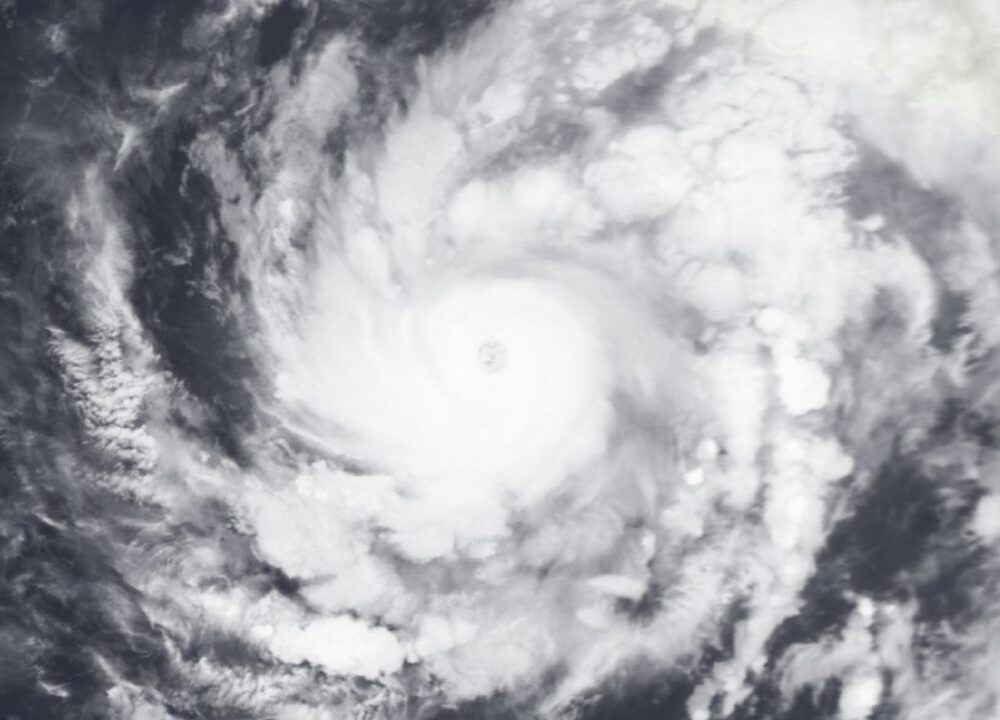
Hurricane Trudy became a major hurricane early on Friday, packing sustained winds of 120 mph as it closed in on Mexico’s Pacific coast, where forecasters warned that life-threatening flooding and landslides were now likely through the weekend.
The storm was centred about 240 miles southwest of Acapulco and roughly 335 miles south-southeast of Manzanillo early Friday, moving northwest at about 6 mph, the US National Hurricane Center in Miami said. Trudy was forecast to strengthen further over the coming day, with its eye expected to approach the southwestern and west-central Mexican coast on Saturday.
A hurricane warning was in effect for the coast from Cabo Corrientes northward to Punta San Telmo, with a tropical storm warning from Zihuatanejo up the coast to Manzanillo.
A coast already battered
The heaviest rain was forecast for the states of Colima and Jalisco, where 4 to 8 inches were expected through the weekend, with isolated totals reaching 12 inches. Forecasters and Mexican authorities warned the downpours could trigger flash floods and mudslides, particularly in mountainous areas. Along the coast between Guerrero and Michoacán, outer bands were expected to bring 2 to 4 inches of rain, with up to 6 inches in isolated spots.
The storm arrives in a region that has been battered in recent weeks by storms that left behind deaths and severe flooding, stretching emergency services and leaving saturated ground that makes this weekend’s rainfall far more dangerous. Maritime disasters elsewhere in the Pacific have shown how thin emergency response can be when communities are hit in quick succession.
An unusually busy Pacific
Trudy is not alone. To its northwest, Tropical Storm Simon was weakening and expected to become a remnant low, while farther west, Tropical Storm Champi sat east of Guam on Friday, with a typhoon warning issued for Guam and Rota and a tropical storm warning for Tinian and Saipan, according to the US weather services. The simultaneous storms underline how active the Pacific basin has become this season.
The storm was running parallel to the Mexican coast on Thursday before the latest burst of intensification, according to wire reports, gathering strength from warm waters. Even as climate trackers downgrade national green policies across North America, the rising frequency of rapidly intensifying storms is forcing coastal communities to confront a costlier, more volatile new normal.
Residents along the warning zones were urged to complete preparations on Friday, as dangerous surf and rip currents were expected along southwestern Mexico through the weekend.