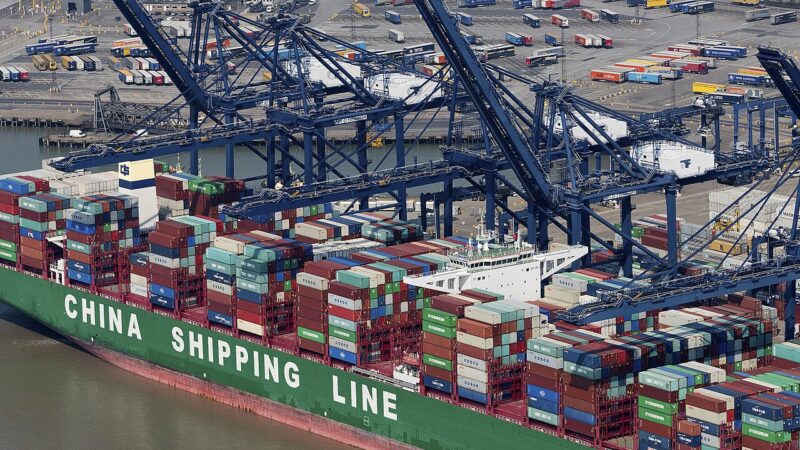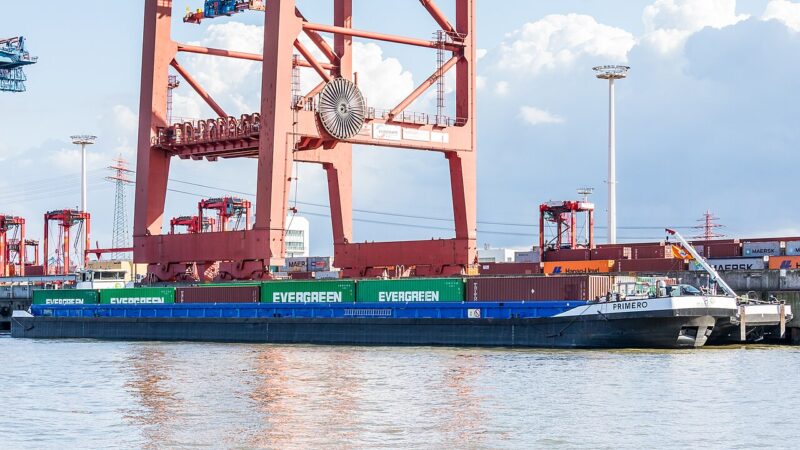
Batteries have quietly become one of the defining lines in China–Europe trade. Lithium-ion batteries rose from about a quarter of one percent of China’s exports to the European Union in 2016 to more than 5 percent in 2025, with forecasts in trade analysis putting the share near 6.6 percent in 2026 — roughly one dollar in every fifteen that Europe pays for Chinese goods, according to customs-based reporting.
The mirror image is just as striking. Europe’s share of China’s worldwide battery exports climbed from about 11 percent to about 38 percent over the same period and is forecast near 40 percent, with shipments to the EU growing faster — reported at about 46 percent in the first eight months of 2026 — than China’s battery exports overall. In plain terms, the marginal Chinese battery is increasingly likely to be loaded for a European port, and the marginal European electric vehicle, storage project or grid battery is increasingly likely to contain Chinese cells.
Brussels now faces the decision Washington made earlier and more bluntly: whether to treat that dependence as a trade problem requiring duties and restrictions, or as a transition input to be managed. Reporting ahead of the October EU–China discussions describes Beijing warning the EU against adopting an American-style restrictive tool, while European officials weigh the same excess-capacity concerns that produced the Milwaukee pledge among the United States and its partners. The difference is exposure: Europe’s carmakers need affordable cells today, and its storage build-out would slow measurably if Chinese supply were abruptly taxed.
For American readers, the triangle matters. United States policy has pushed Chinese battery capacity to seek friendlier markets; Europe’s choice determines whether that capacity finds a durable home or becomes the next transatlantic argument. If Brussels imposes duties, Chinese producers may press harder into third markets where American firms compete. If Brussels accommodates, European dependence deepens and Washington’s claim that allies share the overcapacity diagnosis gets harder to sustain.
Industry detail will decide the politics. Cells, modules, cathode materials and finished packs are different products with different European alternatives; a tool aimed at one layer can raise costs at the next. Expect any European measure, as reported, to be sequenced — investigation, findings, then calibrated duties — rather than a single sweeping tariff, with carve-outs argued model by model.
The battery line on a customs table has become a referendum on how the West manages Chinese industrial scale: separately, at cross-purposes, or — as the capacity pledge attempts — together. Antalya may host the climate argument in November; the battery argument is already running, container by container, into European ports.
Related reading: