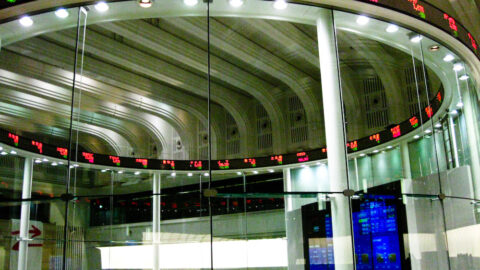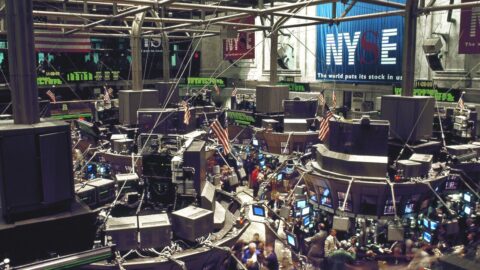
The Nikkei slid into a bear market on Friday as the AI selloff deepened in Asia, a day after Wall Street suffered its worst session since April 2025. Japanese shares fell 1.8 percent in the session, extending a decline that has now carried the index more than 20 percent below its peak, the threshold that defines a bear market. The selling followed the same logic as the American rout: investors reassessing the artificial intelligence buildout, the pace of data centre construction, and the earnings that are supposed to justify the valuations.
Why it matters
The Asian decline shows how quickly a local political event can become a global market event. The trigger was the Democratic sweep in the United States midterm elections, and the expectation that a new Congress will scrutinise data centre expansion and semiconductor exports. That is an American political story, but its consequences are global, because the supply chains for chips, memory and data centre equipment run through Japan, South Korea, Taiwan and China. When American investors sell Nvidia and AMD, Asian investors sell the companies that supply them, and the decline travels east with the trading day.
Japan is particularly exposed, because its market has ridden the AI boom as hard as any outside the United States. Japanese firms supply the equipment, materials and components that make advanced chips possible, and their shares rose with the same enthusiasm that lifted American technology stocks. A bear market in Tokyo is therefore not a local accident. It is a measure of how much of the global rally was built on the same assumption: that the AI buildout would proceed without political friction, and that demand for computing power would grow without limit.
What happens next
The European and British markets fell too, by 0.4 percent each, but the Asian decline was the sharpest, and it sets the tone for Friday trading in the West. A bear market in Tokyo, a correction in New York, and a semiconductor index down 12 percent in a day together describe a market that has changed its mind about the most important trade of the past two years. The question is no longer whether AI will transform the economy. It is whether the companies building the infrastructure will earn enough, soon enough, to justify what investors paid for them.
What happens next depends on the October jobs report, due on Friday, and on whether the new Congress signals a softer or harder line on data centres in its first statements. A payroll figure close to the 65,000 consensus could steady nerves, while a strong number could revive rate hike bets and a weak one could deepen worries about growth. For Asian markets, the immediate test is whether the selling stabilises over the weekend, or whether Monday brings a fresh wave. A bear market is defined by a number, but it is experienced as a mood, and the mood in Tokyo on Friday was fear.