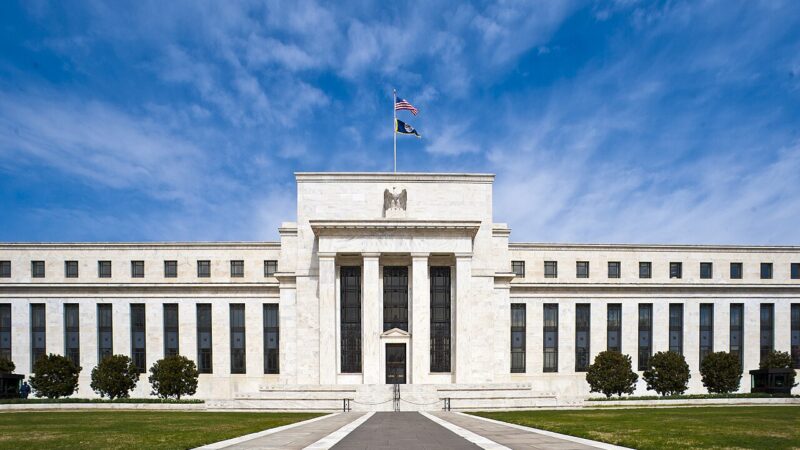
Gold eased about 1 percent to around $4,249 an ounce after the Federal Reserve’s September increase, while central banks across the Gulf split on whether to follow Washington — Saudi Arabia, Oman, Qatar and Bahrain tracking the Fed and Kuwait holding — in a small, precise illustration of how American monetary policy becomes world monetary policy, according to market reporting.
Start with the metal. Gold at these levels is not jewellery demand or a fashion for vaults; it is the market’s hedge against the very yields that now compete with it. A 10-year Treasury near 5.3 percent pays investors to wait, which should cap a non-yielding asset — yet gold holds near its peak, which tells you what buyers are insuring against: fiscal trajectories, geopolitical fracture, and the possibility that today’s high rates are themselves tomorrow’s financial accident. A 1 percent dip on a rate rise is, in that context, less a retreat than a shrug.
The Gulf decisions show the transmission belt. Pegged currencies import the Fed’s policy automatically; to defend the peg, the central bank follows, as Riyadh, Doha, Manama and Muscat did in the reported moves. Kuwait, with its basket peg, retains a degree of freedom and used it to hold — a reminder that “following the Fed” is a continuum, not a reflex, and that each treasury is balancing imported tightening against domestic credit conditions its own borrowers actually face.
For the United States, the mirror image matters. Every Gulf follow-through tightens conditions in economies that buy American aircraft, technology, education and security, while underwriting the dollar system that gives Washington its borrowing privilege. The strong dollar our Business desk describes elsewhere in today’s coverage and the gold price refusing to fall are the same fact read from two sides: the world is paying a premium for American safety, and simultaneously paying for insurance in case that safety is repriced.
Where next depends on which premium the Fed validates. If yields stay high without accident, gold’s insurance bid should slowly bleed. If high yields break something — a borrower, a bank, a treasury market somewhere — the metal’s next leg will not be measured in 1 percent days. At $4,249, gold is not predicting catastrophe. It is quoting its price, and business, lately, has been brisk.
Related reading: