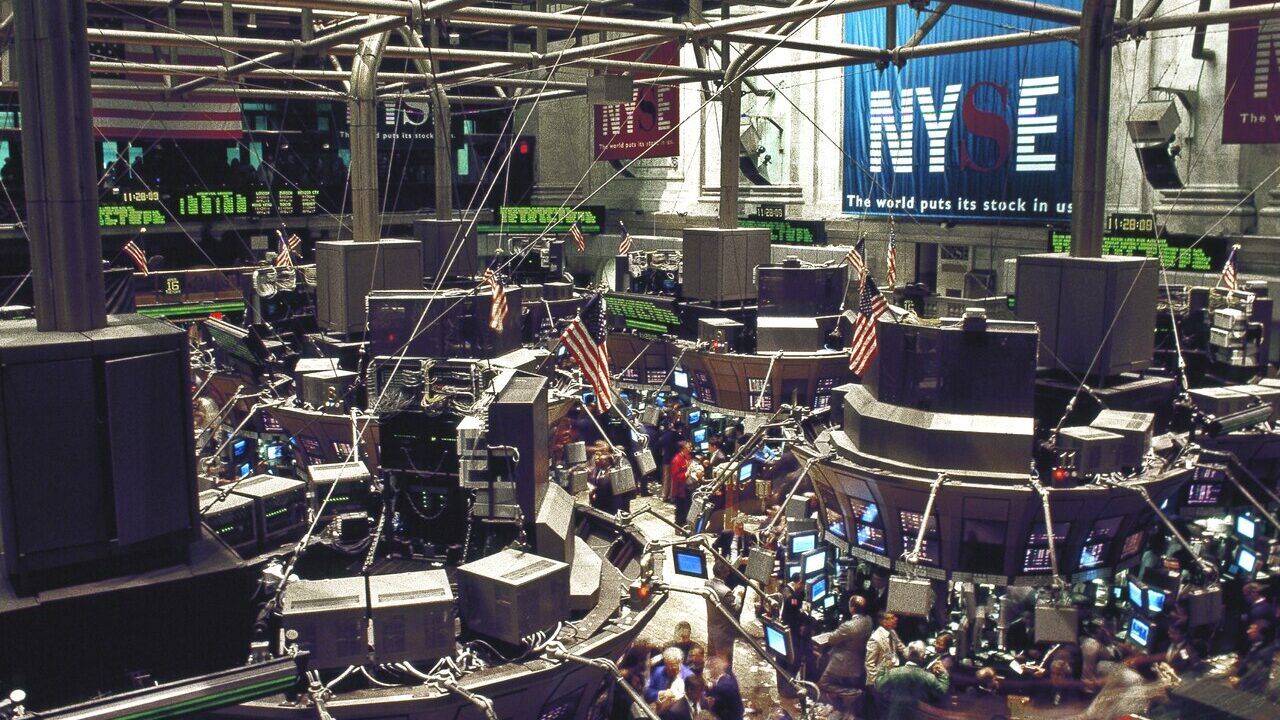
The S&P 500 touched a record 7,844 on October 7, 2026, before slipping the following session as rising Treasury yields and oil above $100 tested a rally that has carried American retirement accounts to extraordinary heights, according to market reporting on the two sessions.
Scale first. The total value of the United States stock market is reported above $82 trillion, with the benchmark index itself representing about $71 trillion — roughly seven and a half times the value of China’s market and about 28 times Germany’s, in the comparisons cited in coverage. The index stands about 24 percent above its March 30 low. For the half of American households with market exposure, mostly through retirement funds, these are not abstractions: the record is the statement balance.
The October 8 pullback showed the rally’s sensitivities in miniature. The Dow eased about a tenth of a percent, the S&P 500 about seven-tenths, and the Nasdaq about 1.6 percent, with large technology names falling after a report of lower-than-expected AI revenue figures revived the argument that artificial-intelligence spending is outrunning its income. Brent crude above $103 and West Texas Intermediate above $91 squeezed the other side of the ledger, while the 10-year Treasury yield near 5.29 percent and the 30-year near 5.67 percent offered savers an alternative that equities must now out-argue every morning.
Underneath, earnings are doing genuine work. Third-quarter profit growth for the index is estimated near 29.5 percent in the survey data cited in market coverage, revised up from about 26.7 percent, with all eleven sectors growing and five at double-digit rates. Initial jobless claims of 197,000 in the week to October 3 describe a labour market that is cooling without cracking. A record index, on this evidence, is expensive but not empty — the profits are arriving; the argument is about their price.
That argument now runs through three choke points: whether AI capital spending converts to revenue before investors tire, whether energy prices feed a second inflation the Federal Reserve must answer, and whether yields near two-decade highs eventually reprice every asset that was bought assuming cheaper money. Records, in other words, are not conclusions. They are the market’s way of raising the standard of proof — and October’s first full week suggests investors intend to apply it daily.
Related reading: