
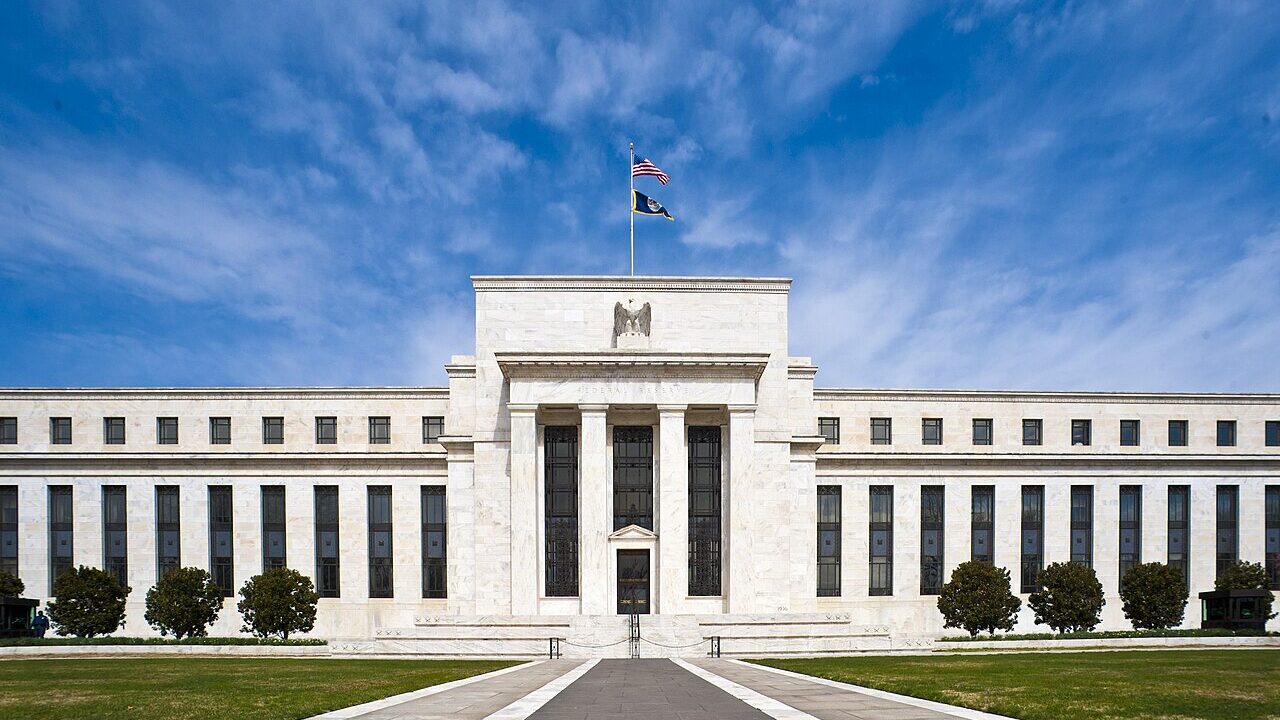
The dollar is trading near an 18-month high after the Federal Reserve’s September 15–16 meeting raised rates by a quarter point with every policymaker’s support — and the minutes then revealed a committee divided about almost everything except that decision, according to currency-market reporting.
That combination — unanimous action, divided outlook — is the dollar’s current engine. Traders, in the market pricing cited in coverage, assign roughly a one-in-five chance to another increase at the October 28 meeting and a much higher probability, near four-in-five, by December. Bank analysis quoted in the reporting describes most officials still viewing further tightening as the likely path, with disagreement centred on timing and on how much weight to give weakening pockets of the economy against inflation that has not finished falling. For a currency, “higher for longer, possibly higher still” is the strongest available advertisement.
The yen shows the other side of the trade, near 157.8 to the dollar in the reported levels, even as Japan posted an August current-account surplus of about ¥4.06 trillion, well above the roughly ¥3.19 trillion forecast. Surpluses used to defend currencies; in a rate-differential world, they merely describe the flows the differential overwhelms. The American 10-year yield around 5.3 percent is the magnet: global savings can earn a developed-market, reserve-currency return that a generation of investors never expected to see again, and the dollar collects the toll.
American readers feel this in both directions. A strong dollar cheapens imports and foreign travel and helps the Fed by tightening financial conditions without another vote; it also squeezes the overseas earnings of American multinationals when translated home, burdens dollar-indebted borrowers abroad, and can tighten credit in economies whose stress eventually returns as American export weakness. The Fed’s minutes, as reported, show a committee aware it is setting monetary conditions for the world while mandated to set them for one country.
The path from here runs through the October 28 meeting and the inflation data before it. A committee that hiked unanimously while arguing about everything else has told markets the bar for the next move is evidence, not momentum. Until that evidence arrives, the dollar keeps its crown — and every borrower, exporter and finance ministry outside the United States keeps paying the subscription.
Related reading: